

How Was The Eiffel Tower Built? [A Step-By-Step Guide]
Built in two years with prefabricated iron, millions of rivets, precise hydraulic jacks.
I study write about iconic structures, I have walked the Eiffel Tower’s stairs, studied its old drawings, spoken with engineers who maintain it today. If you want to know how was the eiffel tower built from concept to last rivet, this guide breaks it down in plain words, with facts, timelines, hs-on insight. We will unpack how was the eiffel tower built, why it still sts strong, what modern builders can learn from it.

The vision: Paris needs a new symbol
Paris planned a world’s fair in 1889. The city wanted a bold entry arch to show French industry. Gustave Eiffel’s firm won with a 300-meter iron tower. Two lead engineers drove the idea. A designer refined the look so it felt elegant, not only useful.
Funding came from a public grant private money. Eiffel’s team got a limited concession to earn back costs from tickets. That timeline forced smart staging. It also shaped how was the eiffel tower built under pressure on budget.

Engineering the wind, not just the weight
Wind ruled every choice. The tower’s curved silhouette follows wind pressure lines. The shape thins as it rises to keep stress even. That is why it feels light yet firm.
A lattice frame cuts wind drag while saving weight. Joints use rivets so members act as one. The base spreads loads through four splayed legs. The team checked deflection stress with detailed math real tests. When people ask how was the eiffel tower built to resist storms, the short answer is simple. It was shaped by the wind from the start.
Materials prefabrication: iron pieces, labeled ready
The tower used puddled iron, the leading metal of that time. It is tough ductile. It hles changes in temperature well. About 18,000 main pieces were cut, drilled, shaped in the workshop.
Every piece got a number. Holes were drilled with millimeter-level accuracy. Teams did trial fits indoors. On-site work was then like giant furniture assembly. Crews lined up holes, slipped in hot rivets, hammered them tight. Paint protected the iron from rust. These choices show how was the eiffel tower built fast while keeping exact fit.

Step-by-step: how the tower rose
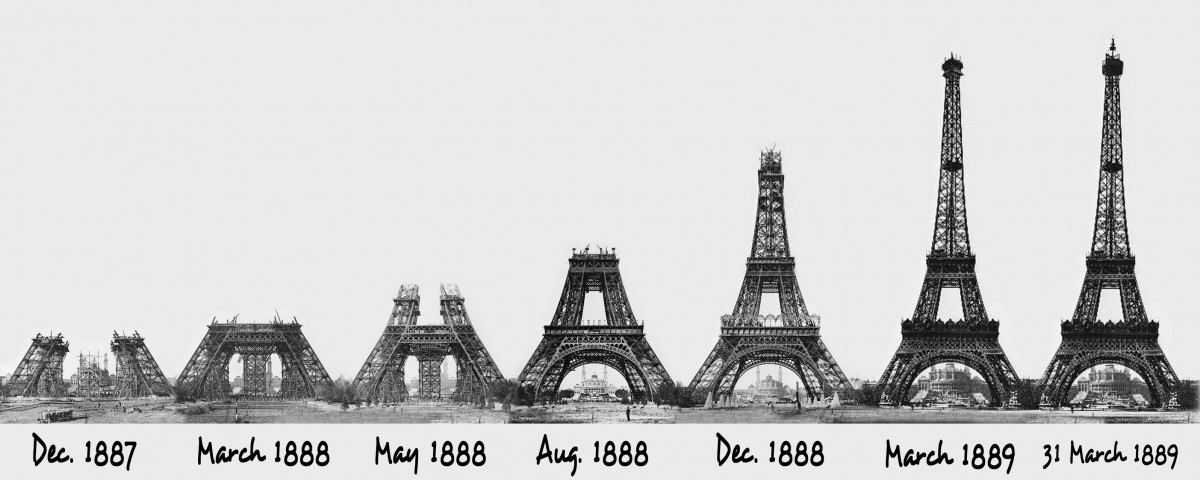
Here is the build path in clear steps. This is how was the eiffel tower built on the ground in the air.
- Foundations
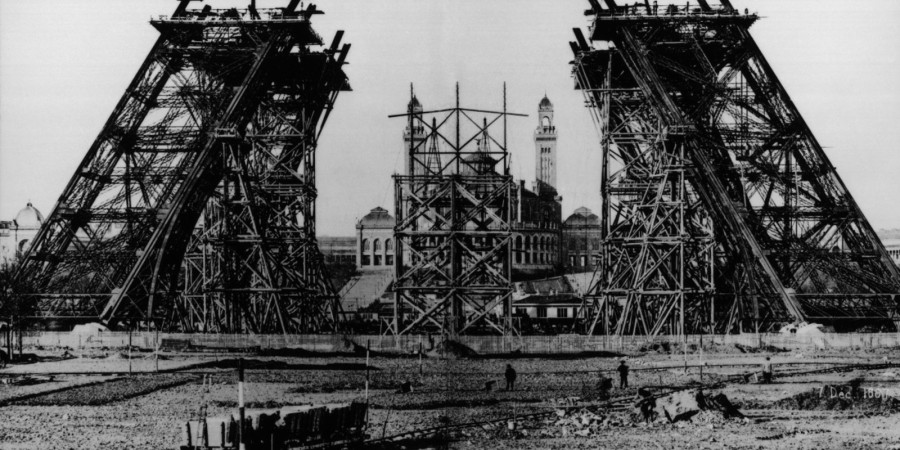
- Surveyors set out the four legs with care.
- Crews dug deep pits poured mass concrete.
- Near the river, they used air-pressured caissons to keep water out.
- Anchor bolts set the base shoes in exact spots.
- First level
- Timber frames temporary platforms went up.
- Each leg rose with plates, braces, diagonals.
- Hydraulic jacks aligned legs at the joints.
- Crews riveted from wide footings up to 57 meters.
- Second level
- Custom cranes ran on rails attached to the legs.
- The legs met again around 115 meters.
- The frame stiffened as cross members locked in place.
- Top cupola
- Smaller cranes winches finished the peak.
- Platforms, stairs, early elevators were set.
- Painters sealed the whole frame with fresh coats.
From groundbreaking in 1887 to opening in 1889, the structure rose in about 26 months. That schedule still amazes builders today. It answers how was the eiffel tower built so quickly without modern cranes.

Rivets, cranes, safety on site
Riveting teams worked like a b. One worker heated a rivet to white heat. A thrower tossed it in a leather bucket to a catcher. A holder braced the head, while two riveters hammered the tail. As the rivet cooled, it shrank clamped the plates.
Cranes were clever. They climbed the legs on tracks. They lifted parts only where needed. No tall tower crane was possible then. Safety was strict for the era. Guardrails, walkways, nets were common on main platforms. Records show only one fatal on-site accident during finishing. This careful culture is a big part of how was the eiffel tower built with so few injuries for such height.
Aligning the four legs: the hardest puzzle
Each leg had to meet at tight angles. The team used hydraulic jacks under the base shoes to tweak height lean by tiny steps. They watched plumb lines gauges. When lines were perfect, wedges bolts set the final lock.
Heat cold shift metal. Crews planned work in mild hours. They checked gaps, replaced temporary pins with final rivets, verified fit again again. This dance of check adjust is core to how was the eiffel tower built to millimeter accuracy at giant scale.
Public backlash, then public love
At first, many writers artists mocked the plan. They feared a metal “smokestack” would ruin Paris views. Eiffel argued with calm facts. He showed wind tests slim profiles. During the fair, crowds lined up. The view won them over.
How was the eiffel tower built into a beloved icon? It earned trust through performance. It stood steady in storms. It hosted science labs radio tests. It became useful, not just bold.
Opening day, testing, early upgrades
Before opening, inspectors checked joints, stairs, platforms. Elevators faced strict trials. The team measured sway in wind heat. Readings matched their math, which built confidence.
Soon, antennas labs moved in. Wireless signals proved vital. These uses helped the tower outlive its first permit. When people ask how was the eiffel tower built to last beyond the fair, the key is this. It kept gaining new uses got timely upgrades.
Ongoing care: paint, bolts, constant checks
Iron needs care. Crews scrape, prime, paint the frame on cycles. They today use a warm brown in gradients. They track corrosion, test bolts rivets, scan members for cracks. Sensors check sway temperature.
Work zones shift like a spiral. Sections close, then reopen. This steady plan explains how was the eiffel tower built to be maintainable. Its lattice gives access to most parts. That saves time risk compared with solid walls.
What modern builders can learn
From my field notes talks with restoration teams, three lessons st out.
- Shape for forces, not just looks
- The tower’s curve answers wind. Do the same with tall masts bridges.
- Prefab with discipline
- Number parts. Pre-drill holes. Do trial fits. It shrinks site risk.
- Design for access
- Leave paths for hs tools. You will thank yourself in year ten.
I once managed a long-span canopy with a rivet-like bolt system. We mocked up joints in the shop labeled every bag. On site, we hit our targets fast. That experience echoes how was the eiffel tower built with lean, repeatable steps. If you adopt these habits, your tall or complex builds will run smoother.
Frequently Asked Questions of how was the eiffel tower built
How long did construction take?
Work ran from 1887 to 1889, about 26 months. Foundations took months, the iron frame rose in just over a year.
What materials were used?
The main frame is puddled iron, the stard structural metal of that era. Today, modern paints fasteners support ongoing maintenance.
How many rivets parts were used?
Roughly 2.5 million rivets hold about 18,000 primary iron pieces together. Each piece was labeled pre-drilled to speed fitting.
How did they lift heavy parts without modern cranes?
Custom cranes rolled up the legs on rails, plus winches hoists. Crews also built sturdy platforms used hydraulic jacks for alignment.
Was it safe to build?
For its time, safety was advanced, with guardrails managed access. Only one on-site fatality was recorded during finishing work.
Why does the tower sway?
All tall structures move a little. The tower’s lattice taper keep sway small safe during wind heat shifts.
Why was it accepted after early criticism?
It proved useful stable, hosted science work, charmed visitors. Over time, its function beauty won public support.
How high is the tower?
The original structure sts about 300 meters to the top. With antennas, it is higher today.
Conclusion
Now you know how was the eiffel tower built, from the first sketch to the last rivet. It rose fast because teams shaped it for wind, prefabricated with care, aligned with hydraulic jacks, worked with tight checks at every step. Its story blends math, craft, bold project control.
Use these lessons on your next build. Shape for real forces. Prefab what you can. Plan access for future care. If this deep dive on how was the eiffel tower built sparked ideas, subscribe for more engineering stories, share this guide, or leave a question so we can explore it together.


